
Angelis — Latin, “from the angels”
Pioneering Targeted Tumor Therapy
ANGELIS Oncology is an oncology startup dedicated to advancing PLX038, now designated ANG038, a long-acting, tumor-targeted prodrug of SN-38, the active metabolite of irinotecan and the payload used in Trodelvy. ANGELIS Oncology announced its launch and the acquisition of PLX038 from ProLynx Inc. on June 15, 2026, with an initial focus on rare CNS tumors and glioblastoma.
How PLX038 works
PLX038, now called ANG038, is a long-acting PEGylated prodrug of SN-38 (PEG~SN-38), the active metabolite of the approved anti-cancer agents irinotecan (Camptosar®, CPT-11) and Trodelvy® (sacituzumab govitecan). SN-38 is a potent inhibitor of topoisomerase 1 (topo1) that causes replication stress, inhibition of DNA synthesis and DNA damage leading to cell death in susceptible tumors. As a long-acting DNA damaging agent, PLX038/ANG038 causes synthetic lethality in tumors with DNA damage repair defects and enhances the effects of drugs that inhibit the DNA damage response (DDR), such as PARP inhibitors.
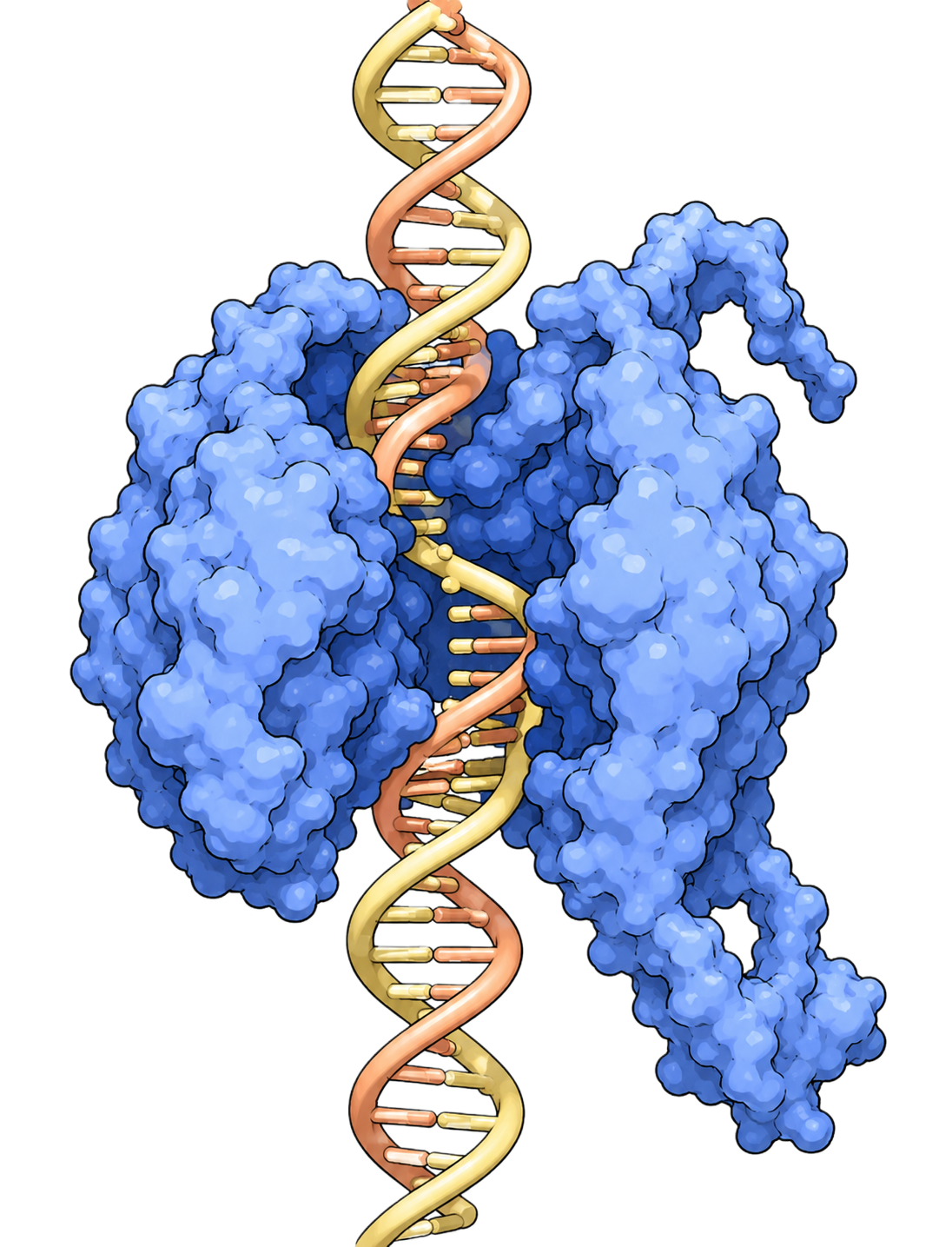
Topoisomerase 1 Bound to DNA
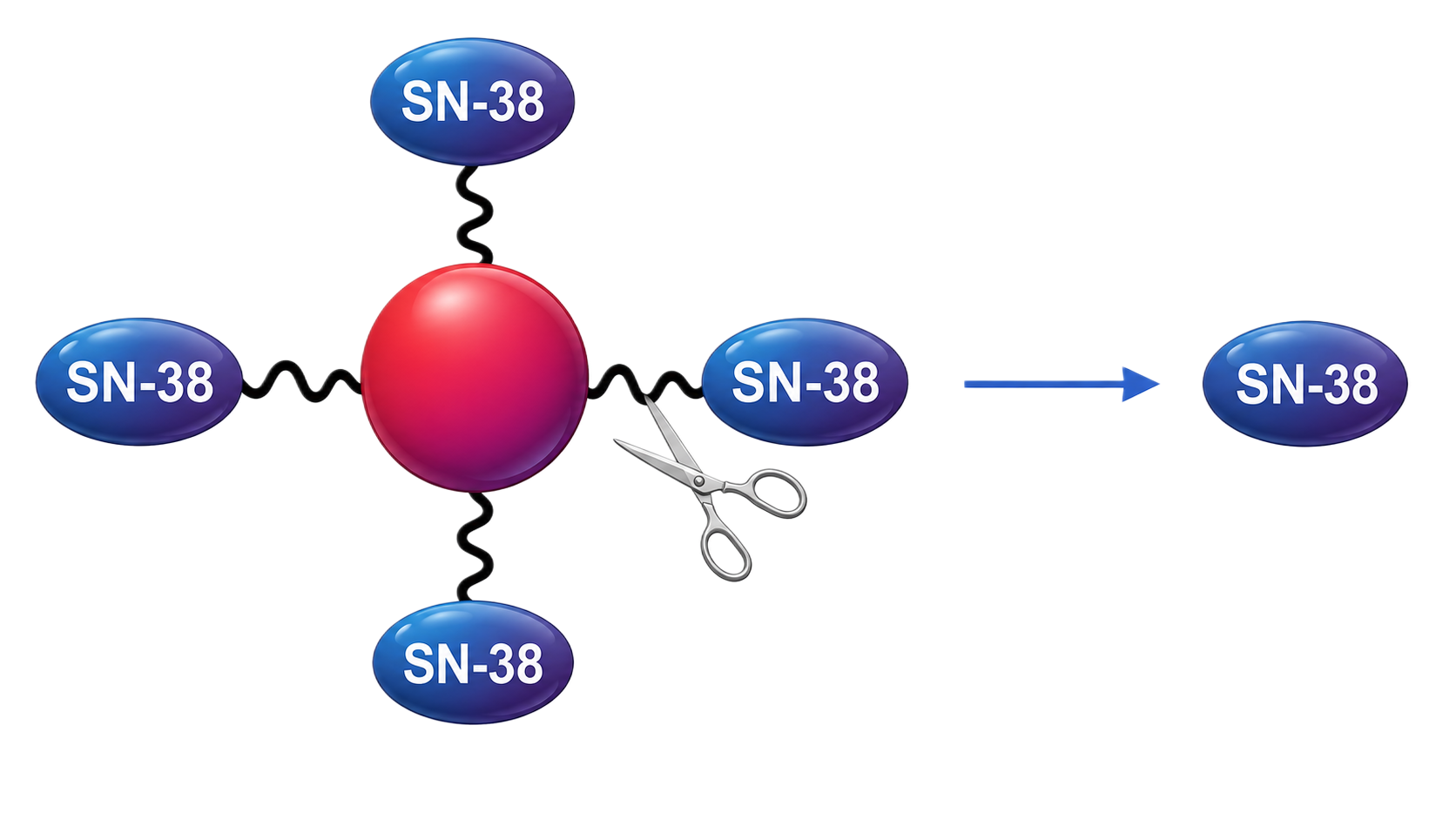
The long-acting PLX038/ANG038 contains four SN-38s releasably connected to a 4-arm 40 kDa PEG through releasable linkers and slowly releases SN-38 in the physiological environment.
Topoisomerase 1 Inhibition. Inhibition of Topo1 leads to single-strand DNA breaks and leads to replication stress, inhibition of DNA synthesis, and ultimately cell death in susceptible tumors. It has been shown that continuous, protracted administration of topo1 inhibitors is advantageous over intensive bolus-delivery.
SN-38 is one of the most potent inhibitors of topo1. SN-38 is too insoluble and has too short of a half-life to administer directly, and requires the use of soluble pro-drugs. Irinotecan, the paradigm SN-38 prodrug, is FDA approved and primarily used for treatment of colon cancer in combination with other agents. While highly effective, Irinotecan has many undesirable features:
It is extensively metabolized so its pharmacokinetics and pharmacodynamics show high inter-patient variability.
It is administered as a bolus infusion and shows a high Cmax – associated with toxicity – and short half-life.
It requires activation to SN-38 in the liver, and as a consequence often shows severe GI toxicity due to extensive glucuronidation and excretion into the bile.
The high toxicity and short half-life limit dosing regimens such that topo1 is not effectively inhibited for most of the dosing cycle.
Irinotecan is thus a sub-optimal prodrug of SN-38, with limited effectiveness as an antitumor therapeutic.
DNA Damage Response. Cells undergo thousands of DNA damage events each day. However, normal cells mount an effective “DNA damage response” (DDR) to recognize and correct the DNA damage with high fidelity, even in the face of DNA damaging agents such as topo1 inhibitors. However, many cancers have DDR defects and are less able to repair DNA damage, such as the situation with BRCA-deficiency. Also, even if tumor cell viability is conserved with one DDR defect, impairment of two or more – for example, in a tumor with a genetic BRCA deficiency treated with a PARP inhibitor – results in cell death by synthetic lethality. Cancers having a defective DDR display heightened sensitivity towards DNA-damaging agents – in particular PLX038/ANG038 – due to a decreased ability to repair DNA damage resulting in lethality. Because of its superior pharmacokinetics, PLX038/ANG038 has the potential to be used in combination with a variety of DDR inhibitors and in tumors which have pre-existing DDR defects. Tumors with a weakened DDR comprise a substantial portion of cancers and can be detected with use of appropriate biomarkers.
CNS tumor development rationale
As a single-product company, ANGELIS Oncology is focused on translating this mechanism into treatment advances for patients with otherwise limited options in neuro-oncology and, over time, other susceptible tumors.
ANGELIS Oncology is initially prioritizing CNS tumors because ANG038 has shown tumor-selective penetration through the blood-brain-tumor barrier, prolonged retention in brain tumors, and minimal uptake in normal brain tissue in preclinical models. In orthotopic models, PLX038/ANG038 demonstrated selective uptake and activity in glioblastoma, medulloblastoma, MYC- or MYCN-driven tumors, and brain metastatic disease.
This CNS focus reflects the company’s initial emphasis on rare CNS tumors and glioblastoma, where unmet medical need remains high and new therapeutic approaches are urgently needed.
Early clinical context
Early clinical findings at the National Cancer Institute support continued advancement of ANG038 in recurrent CNS tumors. In the Phase I portion of an ongoing study in recurrent primary CNS tumors, ANG038 is administered intravenously every three weeks.
The findings support continued development of ANG038 both as a single agent and potentially in rational combinations for selected tumors.
Read our latest press release.